Neighborhoods — The corridor
North Central
Small lots, older duplexes, the city's deepest bench of taquerias, and more households per acre than anywhere else in San Mateo.
On the map
On the slope
- Elevation
- 38 ft
- Band
- The corridor
- Nearest platform
- San Mateo
- Getting to it
- 5–12 minutes
- Street pattern
- A tight grid of numbered and named blocks
- Fog
- Rarely, and it burns off first
- Tree canopy
- Thin — small lots, few street trees, little shade on the grid
- Noise
- Caltrain horn, El Camino traffic, sirens on the corridor
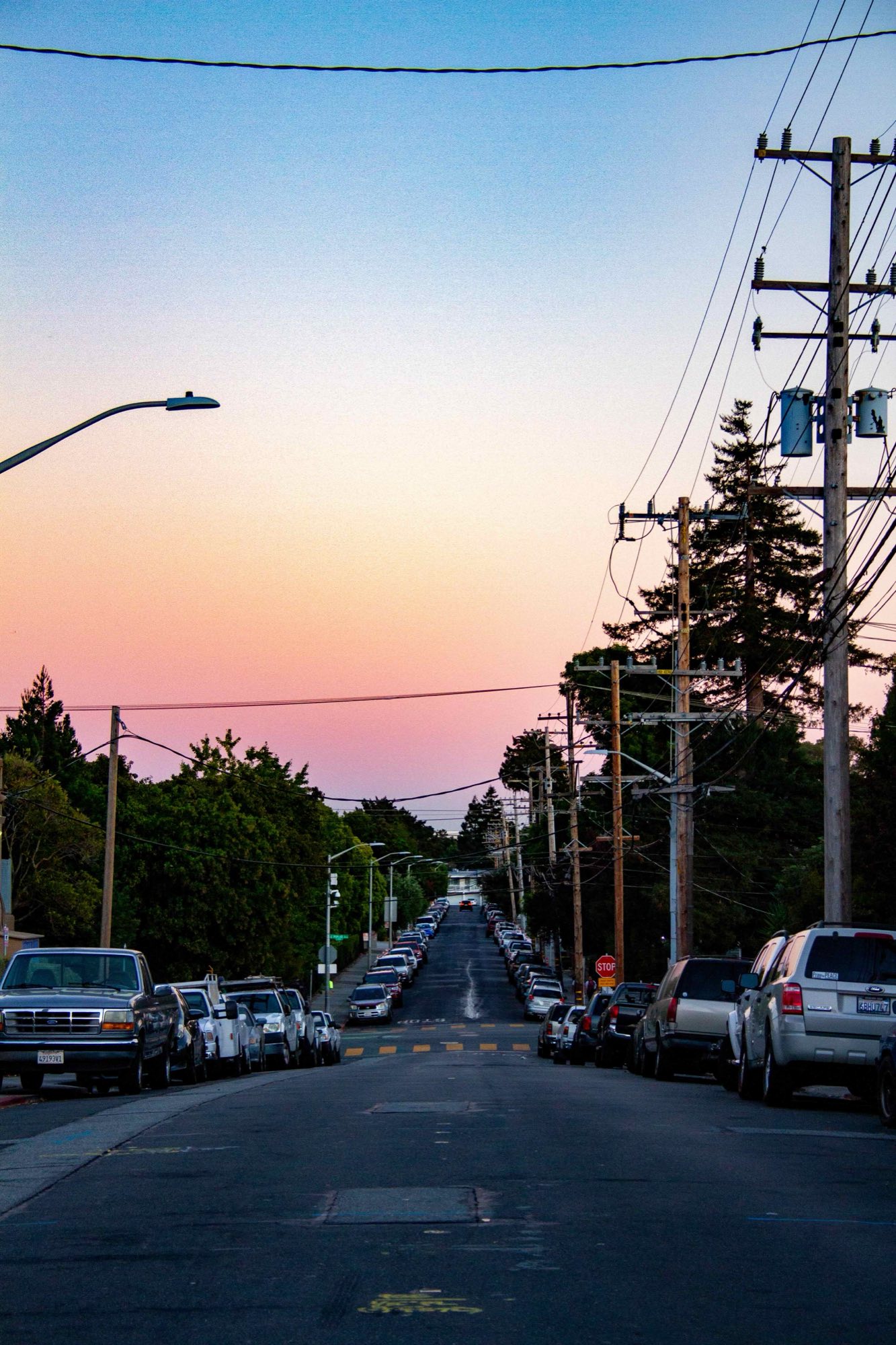
North Central runs north from downtown along the El Camino side of the tracks, and it is where San Mateo's working history still shows. The lots are small, the housing stock is a mix of 1920s bungalows, postwar duplexes, and apartment buildings from every decade since, and the population per acre is the highest in the city.
The cheap food is the reason people cross town for dinner — taquerias, pupuserías, Filipino and Peruvian counters, panaderías that are out of the good stuff by afternoon. The North Central Neighborhood Association is one of the more active in town, and the community garden and the neighborhood center are used rather than ceremonial.
What it's actually like
Urban by Peninsula standards. Street parking is contested. Trains and the occasional siren carry. A train, a grocery store, a laundromat, and four restaurants are all reachable on foot without crossing a highway, which is not true of most of San Mateo.
The housing is older, which means charm and also knob-and-tube, single-pane windows, and foundations that predate any code still on the books. Rentals here are among the more affordable in the city — a relative claim on the Peninsula, and a real one.
Getting out
On foot, second only to downtown. A train, a grocery store, a laundromat, and four restaurants are reachable without crossing a highway, which is not true of most of San Mateo. El Camino is the exception and the constant: anything on its far side means a signal and a wait.
By train, the San Mateo platform is walkable from most of the neighborhood — five to twelve minutes depending on the block.
By bike, flat and close-grained, with a grid fine enough that there is almost always a quieter parallel street. The El Camino crossings are the whole route-planning problem.
By car, driving north on El Camino at 8am is a slow way to start a day; the on-ramp to 101 at Peninsula is usually faster. Street parking is contested and the permit rules vary by block.